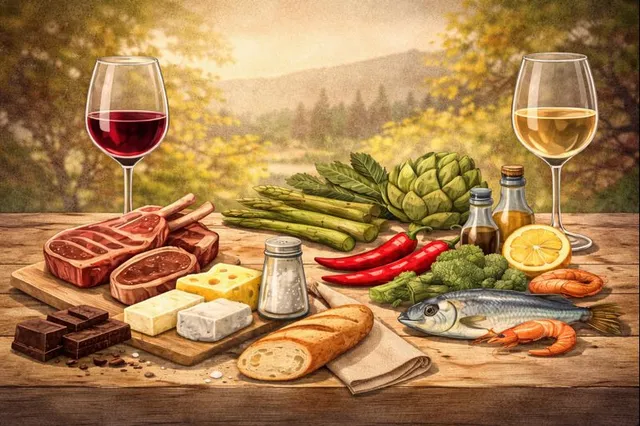
Wine tannins aren’t felt in isolation: food can radically change how they feel on the palate. A tannic wine can seem harsh with the wrong dish—and then feel balanced and silky when the pairing is right.
Understanding how tannins interact with fat, protein, salt, and certain flavors helps you enjoy structured reds more—and choose pairings with confidence.
Quick summary
- Protein and fat often soften the perception of tannins.
- Bitterness, heat, and strong acidity tend to make tannins feel harsher.
- A great pairing doesn’t “remove” tannin—it helps it feel integrated and more harmonious.
Gallery: pairings that change how tannins feel


What kinds of foods soften wine tannins
🥩 Protein-rich foods
Protein is one of the best allies of tannins.
- Red meat
- Lamb
- Game meats
- Legumes (lentils, well-cooked chickpeas)
Why it works: Tannins bind to proteins in food rather than the proteins in saliva, which often reduces dryness and roughness on the palate.
That’s why high-tannin wines often work especially well with meat.
🧀 Fatty dishes
Fat can soften the tactile perception of tannin.
- Aged and semi-aged cheeses
- Dishes with butter or cream
- Cuts with visible marbling
On the palate: Fat coats the palate and can buffer astringency, making the wine feel rounder and less aggressive.
🧂 Salt
Salt is a strong tannin “modulator”.
- Grilled meats with salt
- Aged cheeses
- Charcuterie
Salt can reduce the perception of dryness and help structured wines feel more balanced.
🍫 Cocoa and intense flavors (when used well)
- Dark chocolate (high cocoa percentage)
- Dishes with toasted or smoky notes
These flavors can “meet” tannin well, as long as the wine has enough body and concentration.
What kinds of foods amplify tannin astringency
Not every dish interacts well with wine tannins. Some foods can increase dryness and make tannins feel tougher, so the wine comes across as harsher, more bitter, or unbalanced—even if it’s well made.
🥬 Bitter vegetables and bitter greens
- Artichoke
- Asparagus
- Endive
- Strong arugula
These foods often bring bitter compounds that add to tannin’s drying effect. Without enough fat or protein, they don’t “neutralize” astringency—they can amplify it.
Result: Bitterness adds to tannin and increases astringency, making the wine feel rougher.
🌶️ Very spicy dishes
Heat doesn’t “neutralize” tannin—it can expose it.
- Heavily spiced foods
- Intense chilies
The combined effect often feels like:
- More dryness
- Alcohol feeling more prominent
🍋 Very acidic dishes
- Sharp vinaigrettes
- Pickled or escabeche-style preparations
- Citrus-dominant flavors
High acidity can increase the perception of tannin dryness, especially in young wines.
🐟 Delicate fish and seafood
- White fish
- Mild seafood
With very tannic wines, the pairing often feels out of balance: the wine dominates and can seem harder.
Infographic: tannins and food (click to zoom)

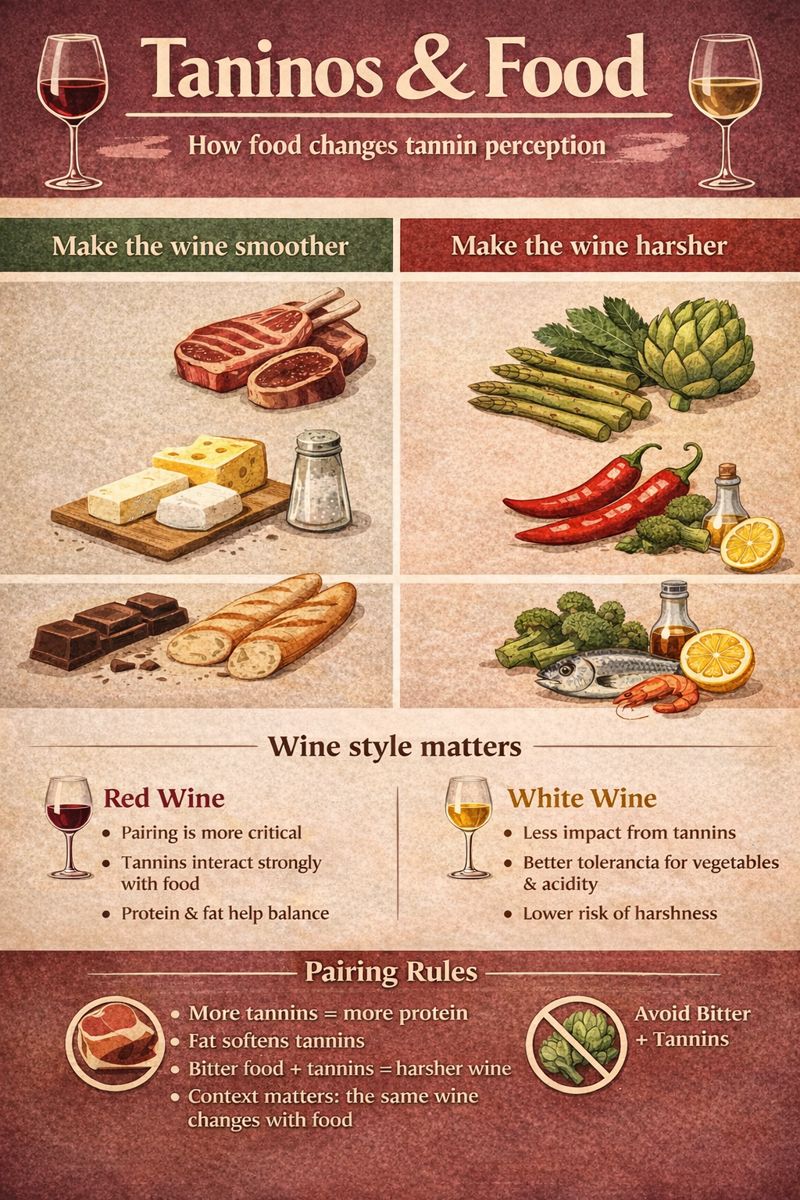
Practical rules to pair tannins without mistakes
| # | Key idea | How to apply it |
|---|---|---|
| 1️⃣ | More tannin → more protein | The more tannic the wine, the more structure your dish should have. |
| 2️⃣ | Fat is your ally | If a wine feels too drying, pair it with fat: cheese, juicy meat, or creamy sauces. |
| 3️⃣ | Avoid bitter + tannin | Bitterness and tannin can amplify each other. If the dish is bitter, choose wines with softer, more polished tannins. |
| 4️⃣ | Balance is everything | The goal isn’t to erase tannin, but to integrate it. A good pairing makes tannin feel more harmonious. |
| 5️⃣ | Context matters | The same wine can feel: • harsh without food • round and elegant with the right dish Tannin isn’t a flaw—it’s a structural tool that needs the right context. |
Conclusion
Wine tannins aren’t understood only in the glass—but at the table. Knowing which foods soften tannins and which foods amplify them helps you enjoy structured wines without frustration and get the most out of their food potential.
This is often the difference between “I don’t like this wine” and “this wine is perfectly integrated with the dish.”